If you’re reading this, chances are you’ve either:
- just bought a “cute” pet water fountain that turned out to be noisy, slimy, or impossible to clean, or
- you’re smart enough to research before you buy and don’t want to waste money or risk your pet’s health.
We work around pet products every day and I still remember how many frustrated messages I’ve received from pet parents:
- “The pump got loud after two weeks and now my cat won’t go near it.”
- “The fountain looked nice in photos, but it’s a nightmare to clean.”
- “I didn’t realize plastic could trigger my cat’s chin acne.”
The good news: once you understand why those problems happen, it becomes much easier to choose a fountain that actually works for your cat or dog and fits your lifestyle.
This guide will walk you through:
- Real buyer mistakes (so you can avoid them)
- The 8 key factors that matter when choosing a pet water fountain
- Which types of fountains fit different cat/dog personalities
- How the fountains we offer are designed specifically around those pain points
Why So Many Pet Parents Regret Their First Water Fountain
Over the past few years, pet water fountains have exploded in popularity. Vets recommend them to support kidney health and help prevent urinary issues, and many cats naturally prefer running water.
But when I look at customer feedback and messages I’ve received, I see the same patterns again and again.
Case 1: It sounded like a mini washing machine at night
One cat parent told me they bought a budget-friendly fountain because the design was “cute.” For the first few days it was okay. After about two weeks:
- the pump started buzzing,
- the vibration echoed through the bowl,
- and the fountain’s gurgling woke them up at night.
Their cat, who was already a bit sensitive to noise, completely stopped using it. Back to the old bowl.
What went wrong?
Cheap pumps, thin plastic housing, and poor internal design amplify noise. As limescale, hair and debris build up around the pump, it gets even louder.
(If your cat is easily startled or you plan to keep the fountain in a bedroom or small apartment, noise level should be one of your top priorities.)
Case 2: “I cleaned it and it was still slimy”
Another owner told me they cleaned their plastic fountain once a week, but still found:
- slimy biofilm on the inside,
- a musty smell,
- and cloudy water after just a couple of days.
They were understandably worried: Is this even safe?
What went wrong?
- Soft, low‑quality plastic scratches easily, and those micro-scratches are perfect for bacteria to cling to.
- Some designs have too many tight corners and hidden parts around the pump where water doesn’t circulate well.
- If filters are low quality or not changed regularly, they quickly become a bacteria hotel instead of a filter.
(Hygiene isn’t just about how often you clean; it’s also about materials and design.)
Case 3: “My cat got chin acne and the bowl was to blame”
This one comes up more often than people expect. A customer with a white-faced cat noticed:
- blackheads and little pimples around the chin,
- more redness over time.
Their vet asked one of the first questions: “Are you using plastic bowls or a plastic fountain?”
Some cats are more sensitive. Plastic can harbor bacteria in scratches and may contribute to feline chin acne.
Case 4: “It looked big online, but it’s tiny in real life”
I’ve heard this from multi-cat families and small-dog households:
- The fountain looked “normal sized” in photos, but when it arrived, the reservoir was small.
- They were refilling it every single day, sometimes twice.
- One dominant pet would hog the small drinking area; the others avoided it.
(If you have multiple cats or a dog that drinks a lot, capacity and drinking surface area matter more than you think.)
Case 5: “The filters cost more than the fountain over time”
Some people focus only on the upfront price of the fountain. A few months later, they’re shocked when:
- proprietary filters are hard to find,
- or replacement packs cost so much that they hesitate to change them as often as they should.
Dirty or overused filters defeat the point of having a fountain.
All of these stories lead to the same question:
How do you choose a pet water fountain that your cat or dog will actually use, and that won’t drive you crazy to maintain?
Let’s break it down step by step.
Step 1: Understand How Your Cat or Dog Likes to Drink
Before looking at materials or filters, think about your pet’s natural habits.
Ask yourself:
- Does my cat like to drink from the tap, or does she paw at the water?
- Does my dog prefer shallow water or will he stick his whole muzzle in a deeper bowl?
- Is my pet skittish about new objects or noises?
- Do I have multiple pets that might drink together or take turns?
Different designs suit different personalities:
- For cats that love running taps
Look for fountains with a free-falling stream or “faucet style” spout. - For shy or easily startled cats
A gentle bubbling surface with almost no splash is usually better. - For short-nosed dogs (pugs, bulldogs) or flat-faced cats
Prefer wide, shallow drinking areas so they don’t have to dunk their face. - For multi-pet households
Make sure there’s 360° access or at least enough space for two pets to drink without crowding.
Step 2: Choose the Right Material (Hygiene & Skin Health)
The three main materials you’ll see are:
1. Stainless Steel
- Pros
- Very hygienic, less prone to harboring bacteria
- More resistant to scratches
- Often recommended for cats prone to chin acne
- Usually dishwasher-safe (upper parts)
- Cons
- Slightly higher upfront price
- Can show water spots if not dried
Best for: cat acne-prone cats, hygiene-focused owners, multi-pet homes.
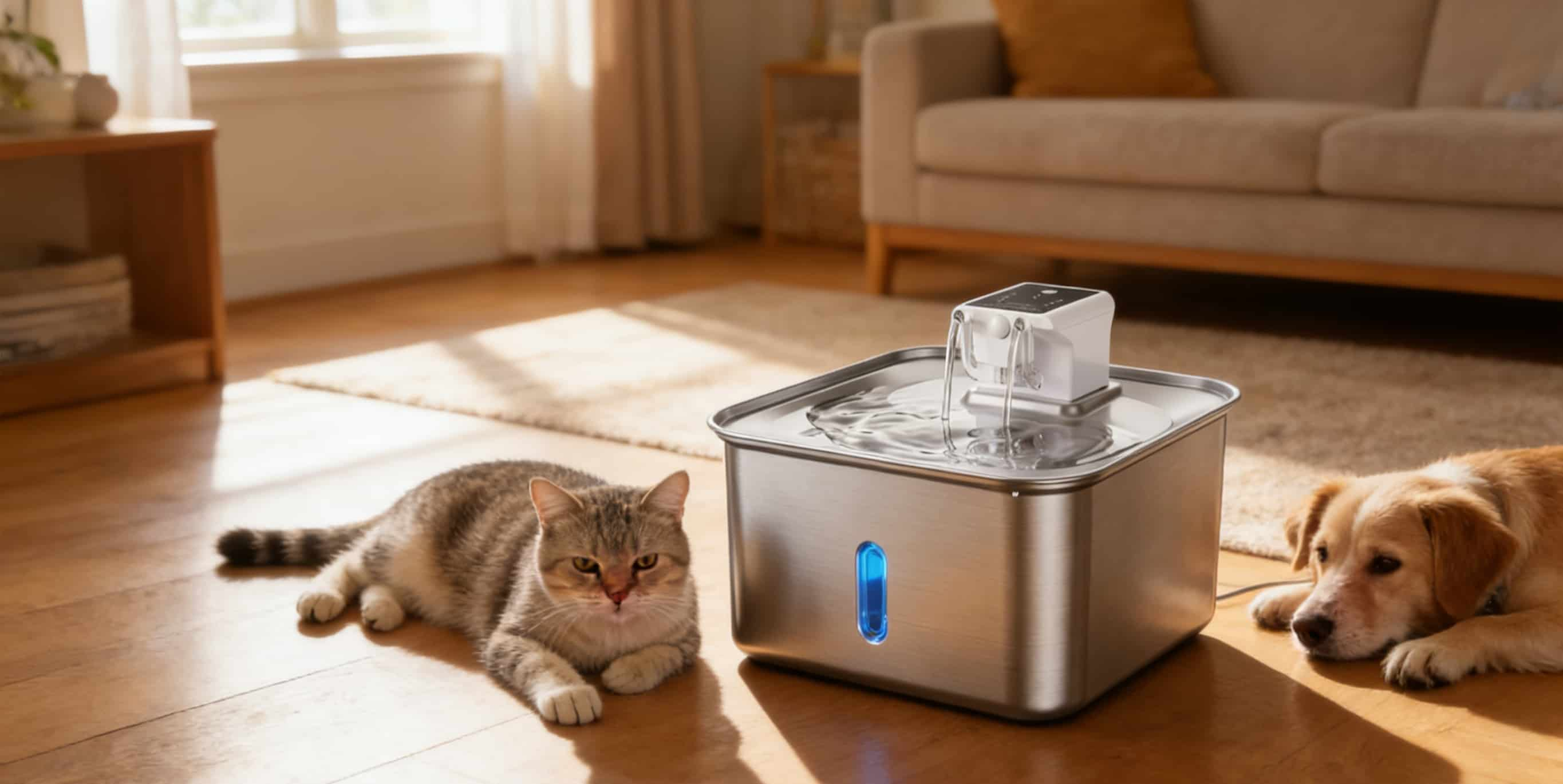
At PetSuperFactory, one of the designs we’ve focused on is a stainless steel cat water fountain around 3L capacity — large enough for multiple cats, with a wide, shallow bowl to reduce whisker stress and keep it easy to clean.
2. High-Quality, BPA-Free Plastic
- Pros
- Lightweight and more affordable
- More color and shape options
- Cons
- More prone to scratching (bacteria can cling in micro-scratches)
- Not ideal for cats with known plastic sensitivities
If you go with plastic, look for:
- BPA-free materials
- Simple, smooth surfaces
- As few tiny crevices as possible
3. Ceramic
- Pros
- Heavy and stable
- Smooth surface, relatively hygienic
- Aesthetically pleasing
- Cons
- Easier to chip if dropped
- Not as many options or features as steel/plastic
Step 3: Capacity – How Much Water Do You Actually Need?
A rough guideline many vets use:
Cats and small dogs need around 50–60 ml of water per kg of body weight per day (including moisture from food).
As a simple rule of thumb:
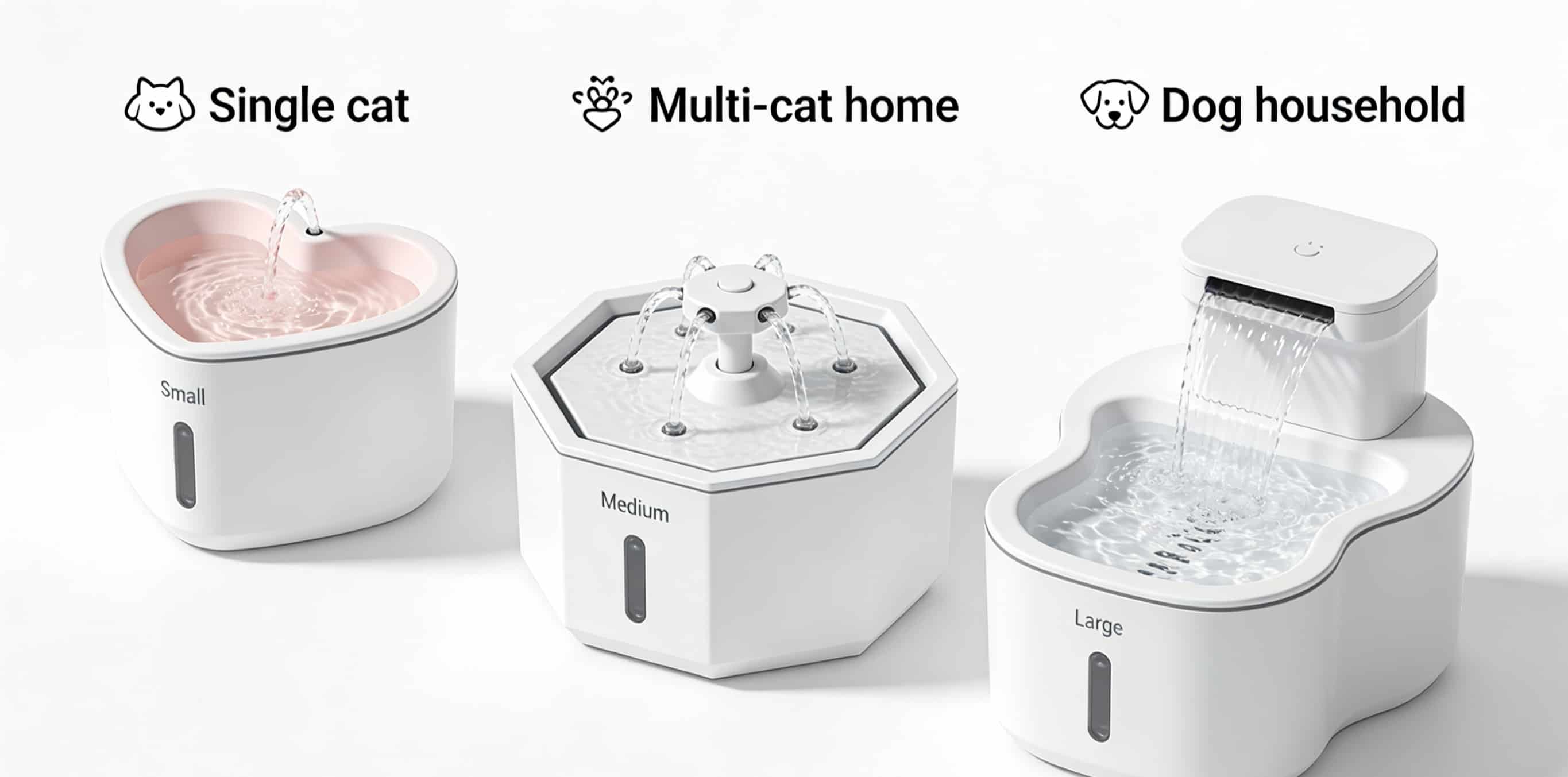
- Single indoor cat
A 2–2.5L fountain is usually enough. - Two or three cats / one cat + small dog
Aim for at least 3–4L. - Medium dog or multi-pet household
Look for 4–6L or higher, with a wide drinking surface.
If your fountain is too small:
- You’ll be refilling constantly.
- Some pumps can be damaged if the water level drops too low.
At PetSuperFactory, we typically recommend:
- A compact ~2L fountain for small spaces and single-cat homes.
- A 3–4L stainless steel or elevated fountain for multiple cats or cats + small dogs.
Step 4: Pay Attention to Pump Quality & Noise
For many returns and complaints, the pump is the real culprit.
Signs of a good pump:
- Low noise rating (ideally under ~30 dB in real use)
- Good water flow adjustment so you can fine-tune stream strength
- Stable mounting (suction cups or silicone base) to avoid vibration
- Easy to take apart and clean
Maintenance matters too:
- Even the best pump will get noisier if hair, food, or limescale build up.
- Plan to rinse & lightly clean the pump every 2–4 weeks, depending on your water hardness and shedding.
In our own testing, we focus on ultra-quiet pumps that stay below typical background noise in a living room. They’re designed to keep timid cats comfortable and to be acceptable in small apartments where everything is heard.
Step 5: Filtration System – Not Just a Marketing Buzzword
Most fountains advertise “multi-stage filtration,” but the details matter.
Look for:
- Mechanical filtration
- A mesh or foam layer to catch hair, dust, and kibble crumbs.
- Activated carbon
- Helps reduce odors and improves taste by absorbing some impurities.
- Ion-exchange resin or similar
- Helps with water hardness in some designs.
Key questions to ask:
- How often do filters need to be changed? (Commonly every 2–4 weeks.)
- Are replacement filters easy to buy and reasonably priced?
- Is there a pre-filter sponge to protect the pump from hair?
If filters are expensive or hard to find, you’ll be tempted to stretch their use — which can actually make water dirtier over time.
On PetSuperFactory, our fountains use standardized, easy-to-replace filter packs, and we usually recommend customers grab an extra pack or two to cover the first 3–6 months. That way they’re not tempted to postpone filter changes.
Step 6: Cleaning & Everyday Maintenance
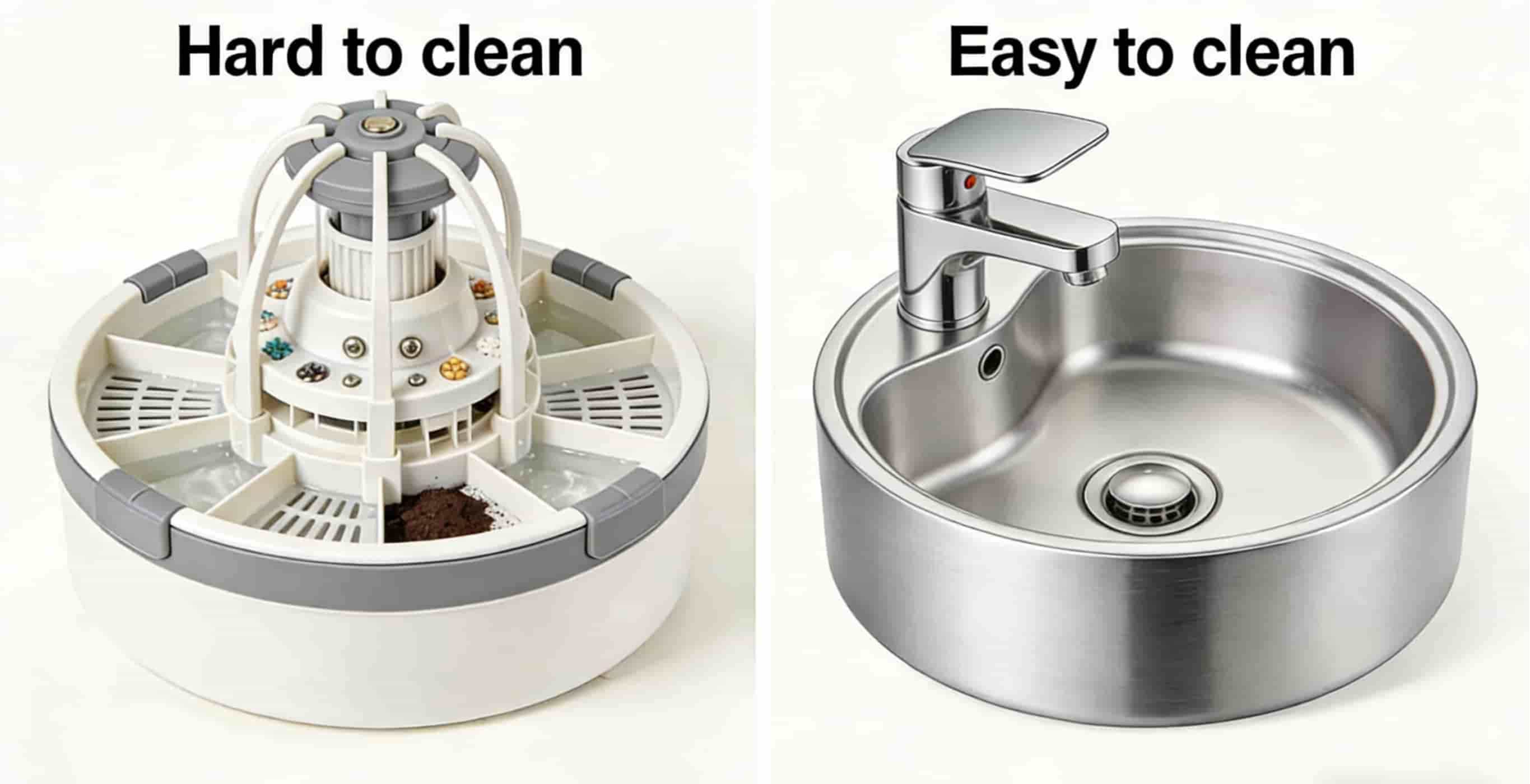
This is where many “pretty” fountains fail hard.
When you evaluate a fountain, think:
“Will future-me curse past-me every time I have to clean this thing?”
A good, practical design will:
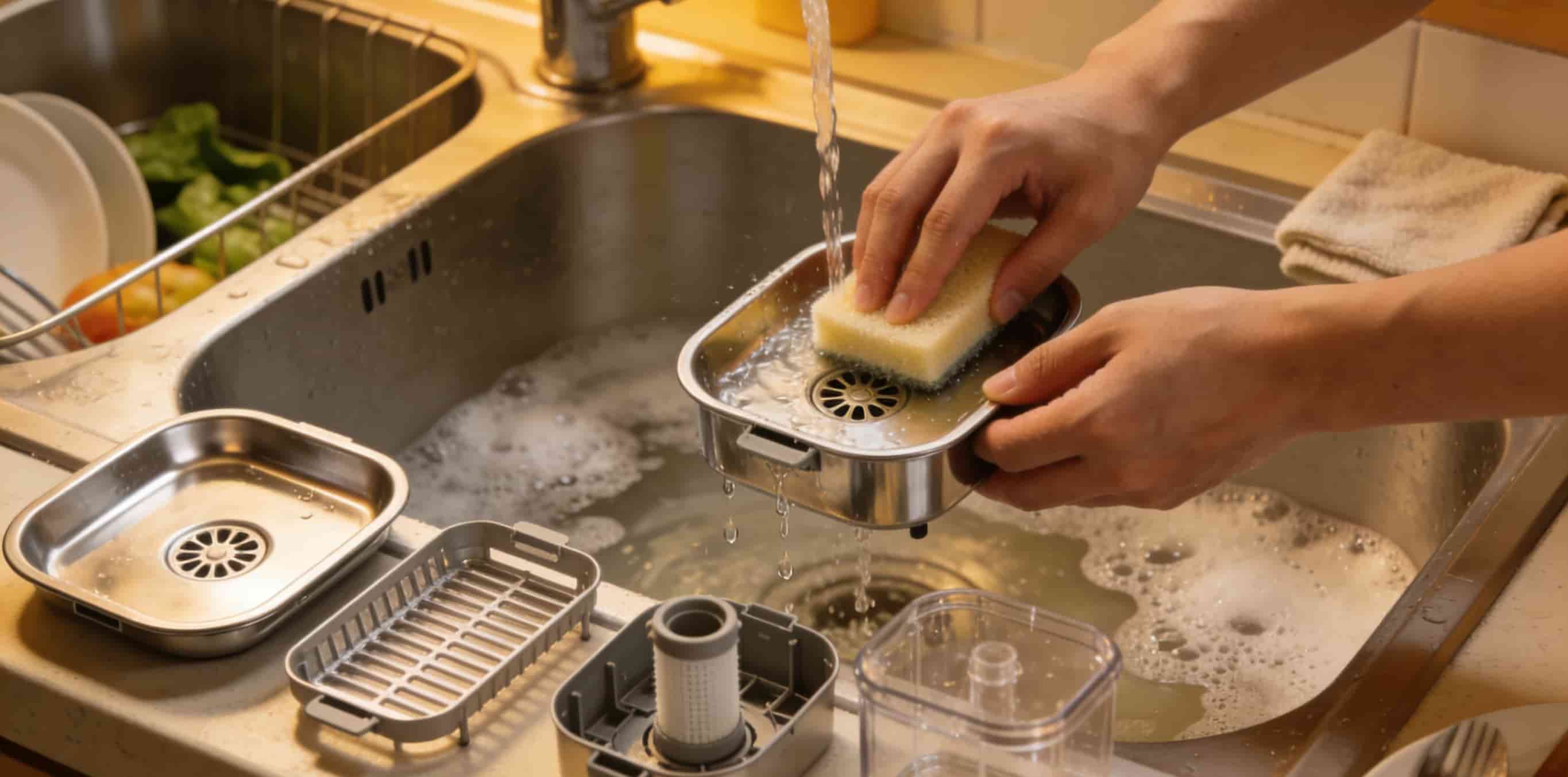
- Break down into just a few large parts
- Have wide openings where your hand or sponge can actually reach
- Let you disassemble and reassemble the pump without tools
- Offer at least some dishwasher-safe parts (usually the bowl/top, not the electrical parts)
If you have to fight tiny silicone pieces, multi-layer hidden chambers, or confusing clips every week, it’s going to sit in a cabinet after a month — and your pet will be back to a boring bowl.
Step 7: Safety, Power & Placement
Don’t overlook the practical side:
- Cord length & routing
- Is the cord long enough to reach your outlet from where you actually want the fountain?
- Can you route it so that no one trips and your dog doesn’t chew it?
- Low-voltage pump
- Most good fountains use safe low-voltage pumps.
- Stable base
- Especially important if you have playful cats or energetic dogs.
- Optional features
- Some fountains have water-level windows, LED indicators, or automatic shut-off when the water is low.
These extras aren’t essential, but they can make life easier and prevent burnt-out pumps.
Step 8: Don’t Get Distracted by Gimmicks
Pretty colors, flashing lights, complex “waterfalls”… they may catch your eye, but your pet doesn’t care about aesthetics.
Your cat or dog cares that:
- The water tastes fresh
- It’s easy and comfortable to drink
- The fountain doesn’t scare them
You care that:
- It’s quiet
- It’s easy to clean
- Replacement filters and parts are easy to buy
- It lasts more than one season
Focus on those fundamentals first.
A Practical Checklist: What to Look For in a Pet Water Fountain
You can literally copy-paste this and compare any product against it.
Essential checks:
- Size & capacity match my pet(s)
- Material is stainless steel, ceramic, or high-quality BPA-free plastic
- Noise level is low enough for bedroom / quiet home
- Pump is detachable and easy to clean
- Filtration includes mechanical + carbon (and resin if needed)
- Replacement filters are easy to buy and not overpriced
- Total parts are simple; I can clean everything I can see
- Stable design; won’t tip easily
- Power cable length/position works for my layout
Nice-to-have extras:
- Water level indicator or window
- Automatic shut-off when water is too low
- Multiple drinking heights or modes (stream + pool)
Use this checklist together with long-tail search terms like:
- “easy to clean stainless steel cat water fountain”
- “quiet water fountain for cats that are scared of noise”
- “best water fountain for multiple cats and small dogs”
- “BPA-free cat water fountain for chin acne”
You’ll quickly filter out a lot of low-quality options.
How PetSuperFactory Fountains Address These Real-World Problems
Everything above is the framework I use when evaluating any fountain — including the ones we choose to offer at petsuperfactory.com.Here’s how some of our typical models map to real-life needs. (You can link these to specific products in your store.)
1. Stainless Steel Cat Water Fountain (~3L)
Best for:
- Cats with chin acne or sensitive skin
- Multi-cat homes
- Owners who prioritize hygiene and easy cleaning
Key advantages:
- Food-grade stainless steel construction with a wide, shallow drinking surface
- Ultra-quiet pump with adjustable flow, ideal for noise-sensitive cats
- 4-stage filtration (pre-filter + carbon + resin) to keep water fresh
- Simple structure: a few large parts that are quick to disassemble and clean
- Top tray typically dishwasher-safe (check individual product details)
This style is a strong answer to owners who have regretted plastic fountains or struggled with slime and odor.
2. Large Dog & Cat Water Fountain (4L+)
Best for:
- Homes with one medium dog or multiple cats
- Pets that drink a lot or share water sources
Key advantages:
- High capacity (4L or more) to reduce refills
- Wide drinking area with 360° access so two pets can drink at once
- Firm, stable base to reduce tipping or splashing
- Comprehensive filtration designed to handle heavier use
If you’ve ever had a fountain that “looked big” online but turned out tiny, this category exists to fix exactly that problem.
3. Compact, Space-Saving Fountain (~2L)
Best for:
- Small apartments
- Single-cat homes
- Owners who want a discreet, quiet option
Key advantages:
- Small footprint, easy to place on a counter or corner
- Very quiet operation, often suitable for bedrooms
- Enough capacity for a single indoor cat with daily check-ins
- Simple design so cleaning doesn’t feel like a project
This style is especially good for first-time fountain users who want to upgrade from bowls without going overboard.
Quick FAQ About Pet Water Fountains
1. Are pet water fountains safe for cats and dogs?
Yes, good-quality pet water fountains are safe and often beneficial. Look for:
- Food-grade materials (stainless steel, quality plastic, or ceramic)
- Safe, low-voltage pumps
- Regular cleaning and filter changes
Poor-quality plastic, cheap pumps, or neglecting cleaning can create problems — but that’s a design and maintenance issue, not a “fountains are unsafe” issue.
2. Do cats really drink more from a fountain?
Many do. Cats are naturally attracted to moving water, and some prefer the taste of aerated, filtered water.
Pet parents often notice:
- More frequent visits to the fountain
- Longer drinking sessions
- Better overall hydration (especially helpful for cats prone to urinary tract issues)
Of course, every cat is an individual, but a well-designed fountain stacked in your cat’s favor will usually increase intake.
3. How often should I clean a pet water fountain?
As a practical guideline:
- Rinse & top up: every 1–2 days
- Full clean + filter check: every 7 days (more often if you have multiple pets, heavy shedding, or hard water)
- Pump deep clean: every 2–4 weeks
If you see slime, smell anything odd, or notice cloudiness, clean sooner.
4. How often should I change the filters?
Most multi-stage filter cartridges should be replaced every 2–4 weeks, depending on:
- Number of pets using the fountain
- How dusty your home is
- If bits of food frequently end up in the water
Check your specific fountain’s guide, but erring on the side of more frequent replacement keeps water fresher (and your pet safer).
5. Are plastic fountains bad for cats?
Not automatically, but they can be problematic for:
- Cats with a history of chin acne
- Households where the fountain gets scratched, scuffed, or roughly handled
If you choose plastic, go for BPA-free, smooth, thick plastic, and keep an eye on the surface over time. If your cat has sensitive skin or repeated chin acne, consider switching to stainless steel or ceramic.
Final Thoughts: Don’t Rush the Decision
A pet water fountain isn’t just another gadget; it’s part of your cat or dog’s daily health routine.
To recap:
- Start with your pet’s personality and habits.
- Choose material and capacity that fit your household.
- Prioritize pump quality, low noise, and ease of cleaning.
- Make sure filters and spare parts are easy to buy and reasonably priced.
- Ignore flashy gimmicks; focus on comfort, hygiene, and practicality.
If you keep those points in mind, you’ll avoid most of the regret stories I hear from frustrated pet parents.
When you’re ready to compare options, you can use this guide together with the fountains we offer on
brand site to find the best match for your cat or dog — and for your home.